Questions

  • Ask and Answer
  • Have a question for myself or the community about dealer websites, lead vendors, crm/ilm or something general about Internet sales? Email me, and I'll post it on the site.


Opinions & Advice

The Dealership Hiring Dilemma

Posted by Guest Poster  |  Wednesday, August 25, 2010  |  Posted in Opinions & Advice

Finding Sales People to work 60 Hours a Week?

A Sales Manager asked me the other day, “why am I having such a hard time finding salespeople who want to work 60 hours a week?” For those of us who have lived much of our lives in and around a dealership, 50-60 hours a week may seem like a common work environment. But I started asking myself a serious question like “why should anyone have to work that many hours?”

Many dealerships haven’t changed much over the years. We still pay salespeople strictly on a commission basis, we still feel like by hiring them we own their lives, we still have trouble hiring professional people, and we still expect the ones we do hire to be successful on their own. I know there are a lot of reasons we haven’t changed our philosophy for how we run our sales department, some of them even logical. But you would think after all the years the auto dealership has been around we could have come up with a better way of hiring and handling our employees.

About the Author

Mike Whitty has been training dealership salespeople and managers for over 20 years. He has received national acclaim for his training techniques, communication skills and development of training tools. You can learn more about Mike at http://www.mikewhitty.com/

Share and Enjoy:
  • Digg
  • Sphinn
  • del.icio.us
  • Facebook
  • Google Bookmarks
  • FriendFeed
  • StumbleUpon
  • Technorati
  • LinkedIn
  • Twitter

Stay Connected!

Join our NEW Dealer Forums for more conversation, find us on Facebook or follow DealerRefresh on Twitter


alex.snyder Purecars.com – is it worth it?

Posted by Alex Snyder  |  Wednesday, August 18, 2010  |  Posted in Opinions & Advice

I was running through a dealer’s website the other day and came across Purecars.com on their website.  I haven’t heard much about Purecars.com in a while and decided to look at it again.  I started a thread in the forums to gauge whether anyone was doing anything with it and not much has been said, but then I came across this statement on their dealer page.

The PureCars Pricing Graph

The number one concern used car buyers have is price. With hundreds of customers clicking the PureCars Value Report button found on every used vehicle page on your website, we’ll independently verify for customers when you’re priced below market. Customers will see the PureCars Pricing Graph when they’re getting a great price, and if you’re priced above market, there’s no worries, as the PureCars Value Report will automatically showcase all of the other known value highlights of your vehicles such as Vehicle Certification, Owner and Accident History, Low Miles, and Popular Color, among others.

This got me thinking “how does Purecars.com make a car that is priced too high appear to be a good value for a customer?”  This program sounds really good!

Share and Enjoy:
  • Digg
  • Sphinn
  • del.icio.us
  • Facebook
  • Google Bookmarks
  • FriendFeed
  • StumbleUpon
  • Technorati
  • LinkedIn
  • Twitter

Stay Connected!

Join our NEW Dealer Forums for more conversation, find us on Facebook or follow DealerRefresh on Twitter


The Car Shopper on Your Website has Changed, Have You Noticed?

Posted by Guest Poster  |  Monday, August 2, 2010  |  Posted in Opinions & Advice

Shoppers love car shopping on the ‘net.

For the last decade they’ve used the internet as their primary vehicle shopping tool.  Internet shoppers on your site right now are on their 2nd, 3rd or 4th “internet vehicle”… BUT, something has changed!  What’s different this time?

This is the 1st time your internet shopper has been in a recession while shopping for a car.

Never before have your Internet Marketing efforts been more important to you, your store and to your very cautious car shopper.  News of the Recession is everywhere (and so is the evidence) so it’s no surprise our car shopper in 2010 is very cautious and is taking their time.  I can confirm this “cautious shopper” observation via our post sale survey we do at delivery. This year’s results clearly show that impulse buying is down dramatically and cautious shopping has grown in its place. (e.g. shopping under 2 weeks is way down and shopping more than 2 months is up).

Here’s some more proof, compare the 2 Google charts below…

About the Author

Joe Pistell is Marketing Director for Sun Auto Warehouse. His work can be seen at UsedCarKing.com. Joe’s prior successes include co-founder of 3 successful multi-million dollar start ups.

Share and Enjoy:
  • Digg
  • Sphinn
  • del.icio.us
  • Facebook
  • Google Bookmarks
  • FriendFeed
  • StumbleUpon
  • Technorati
  • LinkedIn
  • Twitter

Stay Connected!

Join our NEW Dealer Forums for more conversation, find us on Facebook or follow DealerRefresh on Twitter


Rethink Giving Your Inventory Away to FREE Sites

Posted by Brian Pasch  |  Thursday, July 29, 2010  |  Posted in Opinions & Advice

According to a recent study today by J.D. Powers and Compete consumers spend more time on third party websites in the 6 months prior to purchase than manufacturer website. According to a press release issued today:

“In each of the discrete six months preceding vehicle purchase, greater proportions of buyers visit third-party websites, compared with manufacturer websites, although this changes during the actual month of purchase. In the month of purchase, visitation to manufacturer websites increases to match visitation of third-party websites, with 31 percent of all new-vehicle buyers visiting each type of website.”

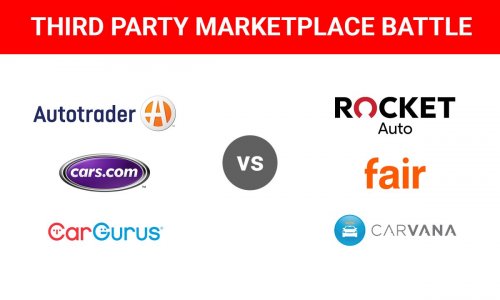
What is not being said in this press release is why third party sites are so strong?  Some answers are obvious like the results of strong traditional advertising campaigns from sites like Cars.com, Autotrader.com, and Edmunds.com.

But the back story is that car dealer websites are being pushed off  Google Page One, in their own towns, by larger inventory and content consolidation websites.  Car dealers have little knowledge and strategy to compete against these powerful website platforms which increases the competition for local shoppers to be matched with their cars directly.

The fact that consumers are using third party websites means that your digital marketing strategy must include them.  The key decision that I see from this report is what are the best third party websites to list your cars that will place your cars in front of active shoppers and generate leads.

The choice of third party websites is critical since many cross sell  and collect leads which are sold to your competitors using your own inventory.  Other third party sites are over burdened with banner advertising which also impact leads that are routed to dealers.  Your cars are a valuable asset so make sure you inspect how they are being presented.

Free Is Not Free

One of the most powerful stories in the automotive industry is the negative impact on car dealer’s business model by participating in “free” inventory advertising on third party websites.  Some dealers I have analyzed have their inventory pushed to over 8 different “free” sites.

When I show these dealers that by participating in mass third party marketing their own website no longer appears on Google Page One for a year, make and model search in their own town, they look puzzled.  Yes, their own decisions are hurting their Internet search visibility and they are not be rewarded my more leads from each site.

Where Is Your Inventory Posted?

I encourage readers to track down all the places where your inventory is being advertised and check your CRM for lead volume from these third parties.  If the lead volume, calls or walk-in traffic cannot identify successful sales from these third party sources, I would terminate their feeds.

Dealers will be surprised to see where their inventory is being pushed and also some will find that their inventory has been scraped and stolen.

To see where your cars are being advertised pick five cars that have been in stock for at least 30 days and search Google for their VIN#.  If you see websites listing your cars that you have never authorized, your inventory may have been scraped or pushed out without your permission.

Another fact from the J.D. Powers / Compete.com study was this:

“Among buyers who visit third-party websites, inventory search is the most popular website tool, with 25 percent of buyers accessing this type of information. Among buyers who visit manufacturer websites, vehicle building tools are used most frequently (29%).”

This result from the study should make all car dealers ask how easy is it for consumers to search or build cars on your website.  Some websites that I have seen make consumers jump through hoops to get a list of cars that they want to purchase.

Manufacturer Websites Still Popular

According to the press release:

“Among the 77 percent of new-vehicle buyers who use the Internet in the shopping process, more than two-thirds (68%) visit at least one manufacturer website in the six months leading up to purchase, while a larger percentage—nearly eight in 10—visit at least one third-party website. “

To read the entire press release visit this link and then share what your reactions are to this study?

About the Author

Brian PaschBrian Pasch is the CEO of the Pasch Consulting Group and an active writer for the automotive community. You can also reach Brian at 732-450-8200 or by visiting http://www.dealer-seo.com

Share and Enjoy:
  • Digg
  • Sphinn
  • del.icio.us
  • Facebook
  • Google Bookmarks
  • FriendFeed
  • StumbleUpon
  • Technorati
  • LinkedIn
  • Twitter

Stay Connected!

Join our NEW Dealer Forums for more conversation, find us on Facebook or follow DealerRefresh on Twitter


alex.snyder Dealership Value-Added Programs are BUNK!

Posted by Alex Snyder  |  Wednesday, June 23, 2010  |  Posted in Opinions & Advice

That’s right – BUNK.  As in crap.  Before you start chasing after me with pitch forks, at least read the rest of this article.

What is a value-added program for a dealership?  It is a business to consumer incentive plan that gives a quid quo pro “bonus” when someone purchases something from the dealership.  For example:  customers receive free oil changes for life when they buy a car from your store. This is one of the most common value-added programs.

My experience with these programs dates back to 1999 when I started selling Volkswagens.  Our competitor gave free oil changes and state inspections for life.  They were one of 3 dealers in town doing anything like this.  At the time, I estimate roughly 40% of all customers mentioned their program and that was mainly due to them buying so much newspaper real estate to push it.  As a salesperson, 40% of the customers saying something about it translated into 100% of my customers asking for it.  It really is amazing how selective our memory can be isn’t it?  I was all about our store offering the same or better.  What we were given was a program that only tackled 5 oil changes and state inspections for life.  It forced me to continue to be a better sales person by finding ways to sell around the other guys oil changes for life.

Share and Enjoy:
  • Digg
  • Sphinn
  • del.icio.us
  • Facebook
  • Google Bookmarks
  • FriendFeed
  • StumbleUpon
  • Technorati
  • LinkedIn
  • Twitter

Stay Connected!

Join our NEW Dealer Forums for more conversation, find us on Facebook or follow DealerRefresh on Twitter


Contributors

  • Jeff Kershner Jeff Kershner
    Founder - Writer
    LinkedIn
  • Alex Snyder
    Contributor - Writer
    LinkedIn

Sponsors

  • [Advertisement Image]
  • [Advertisement Image]
  • [Advertisement Image]
  • [Advertisement Image]
  • [Advertisement Image]
  • [Advertisement Image]
  • [Advertisement Image]
  • [Advertisement Image]
  • [Advertisement Image]
  • [Advertisement Image]


advertisement

advertisement

advertisement

advertisement